
Restoration guide
Restoring an early Bronco frame, step by step
The frame decides whether an early Ford Bronco is a restoration or a parts truck. This guide walks through inspecting a 1966–77 Bronco frame, grading the rust, repairing it, protecting it, and knowing when a replacement frame makes more sense.
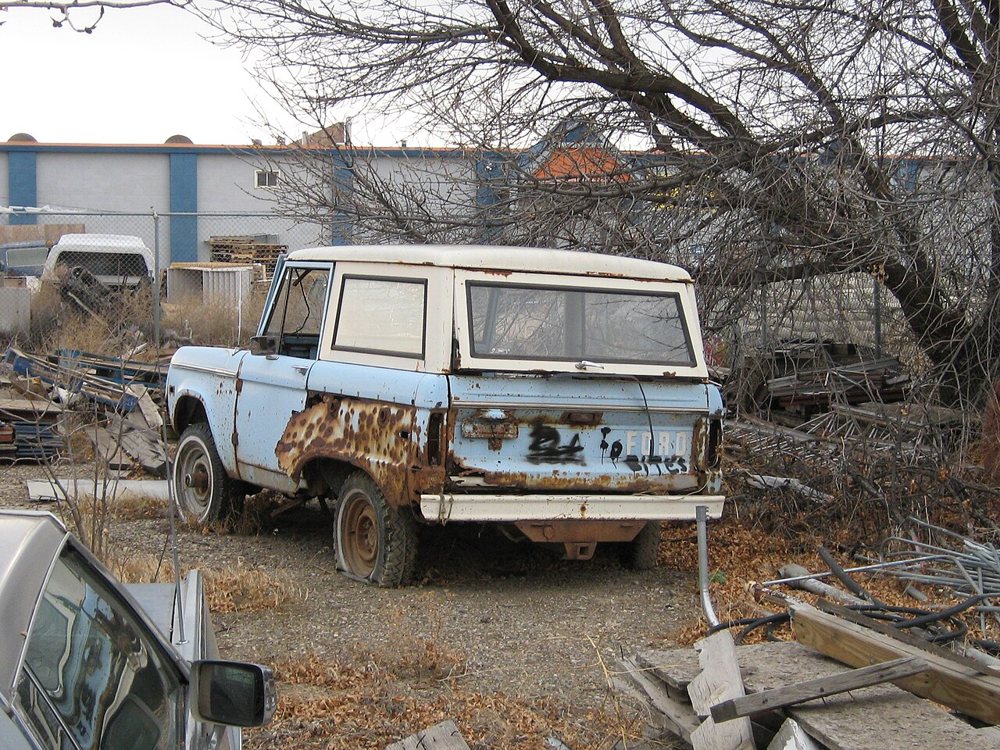
Know the early Bronco frame
- The 1966–77 Bronco rode on a mild steel box-section frame. It rusts where water gets trapped, often from the inside out. KE
- Ford built it body-on-frame on a 92-inch wheelbase. Up front was the "Mono-Beam" solid axle with coil springs, radius rods and a track bar, with leaf springs at the rear. HEM66
- Hagerty's market analyst warns that early Broncos are prone to body rot ("they'd rust in the Sahara") and says he would only consider truly dry examples. K
- Both frame guides cited here come from the Kincer family of companies, which also sells replacement frames. Read the repair-or-replace advice with that in mind.
Step 1: Inspect the frame
Pull the frame-end plugs or caps, clean off the dirt, and work along each rail with a light, a screwdriver and, ideally, a borescope.
| Where to look | What to look for | Source |
|---|---|---|
| Welds at suspension mounts, engine mounts and crossmembers | Rust starting at the weld, where moisture gets trapped | KE |
| Bends in the rails | Faster rust than on the straight sections | KE |
| Open frame ends | Rust from the inside you can't see from outside | KE |
| Crossmembers where they meet the rails | Rust at the joints | KE |
| Drain holes | Water let in after deep-water crossings | KE |
| Steering box mounting area | Cracks, one of the most common problems here | KC |
| Rear axle bump stops to rear body mounts | Rust on the underside of the rail. Poke at it with a screwdriver. | KC |
| Front and rear frame horns | Bending, cracks or rust | KC |
| Body mount holes, under the pads | Rust, one of the most common places to find it | KC |
| Whole frame | Signs of straightening or repair: alignment irregularities, inconsistent welds, paint overspray | KC |
Look, then feel. A small bubble or paint chip can hide a lot of rust, so run a hand along the rails, and use a borescope inside the rails and crossmembers. KE
Step 2: Grade the rust
| Stage | What it looks like | Fix |
|---|---|---|
| Surface rust | Small speckles on the steel | Light sanding or a wire brush, then rust inhibitor KE |
| Scale rust | Flakes or scales where it has gone deeper | Grinder or wire wheel, then rust converter and primer KE |
| Penetrating rust | Holes eaten through the metal | Cut out the section, weld in new metal, prime and paint. Leave it to a pro unless you weld. KE |
Step 3: Remove the rust
- Sanding and grinding: the basic method and the best one for surface and scale rust. Get down to bare metal. KE
- Chemical rust removers: they need direct contact, so they suit small parts and surface rust. KE
- Rust converters: turn rust into a stable compound you can paint over. KE
- Electrolysis: mostly for small parts, and it takes some setup and safety precautions. KE
Step 4: Repair damaged sections
- Penetrating rust has to be cut out and new steel welded in, which is a job for someone who welds well. KE
- If the frame has been straightened or patched before, find out why before you add more repairs. Previous repairs can point to an accident. KC
- Check the steering box mount area for cracks before you put the front end back together. KC
Step 5: Protect it and keep it dry
- Wash the underside regularly to clear dirt and road salt. KE
- Let it dry completely. Trapped moisture is one of the main causes of rust. KE
- Inspect the welds, bends and frame ends a few times a year and fix spots early. KE
- Protect the steel with primer, paint, rust inhibitor, undercoating or powder coat. KE
Repair or replace the frame?
- Replace it when the rust runs through the frame or has made it unsafe, or when repairs would cost more than the Bronco is worth. KE
- The Krawler's Edge repair-or-replace quiz weighs four things: how bad the worst rust is, where it is (small spots, the spring hangers and mounts, or long runs of rail), how often the frame has been patched, and your plans (stock, full restoration, or an engine swap and more power). KE
- Reproduction early Bronco frames that bolt to the factory body, bumper and suspension mounts are sold by chassis builders, and reproduction body tubs exist too. See the parts guide and the vendor directory. KE
- A replaced frame changes how a truck is described when you sell it. The VIN is hand-stamped on the passenger-side frame rail, so keep records and see the VIN decoder. O
Tools for frame work
The Krawler's Edge guide recommends a borescope for the inside of the rails, and a wire wheel and rust converter for surface and scale rust. KE
- Inspection borescope camera For looking inside frame rails and crossmembers. Amazon
- Wire wheel brush for drill or angle grinder (search results) For taking scale rust down to bare metal. Amazon
- Rust converter (search results) Turns remaining rust into a paintable surface. Amazon
- Ford Bronco: A History of Ford's Legendary 4x4 By Todd Zuercher, author of the Early Bronco Registry history cited on this site. Amazon
Prices change, so check each listing.
As an Amazon Associate we earn from qualifying purchases.
FAQ
Can you fix a rusty early Bronco frame?
Usually. Surface and scale rust can be cleaned to bare metal, treated and painted at home. Rust that has eaten through has to be cut out and new steel welded in. KE
Where do early Bronco frames rust first?
At the welds around the suspension and engine mounts and crossmembers, the bends in the rails, the open frame ends and the drain holes. Kincer also flags the rail from the rear axle bump stops to the rear body mounts, and the body mount holes under the pads. KEKC
When should I replace the frame instead of repairing it?
When rust has made it unsafe, when repairs would cost more than the Bronco is worth, or when you'd be patching patches. KE